
Australian Standards
Welcome to our comprehensive guide to Australian Safety Signs and the standards that support their correct design and use. Safety signage plays an important role in Australian workplaces because it helps communicate hazards, mandatory actions, emergency information and other essential safety messages.
In particular, Australian Standards for Safety Signs provide guidance on how different safety signs should look and how workplaces should use them. Understanding these requirements can help businesses improve workplace safety, communicate hazards clearly and select appropriate signage for their site.
In this guide, we explain the main types of safety signs used throughout Australia, their applications and the role of AS 1319 – Safety Signs for the Occupational Environment.
Understanding Safety Signs
What is a Safety Sign?
A safety sign is a visual communication tool that alerts people to hazards, provides safety information or gives instructions within a workplace or public environment.
Most importantly, safety signs help people quickly recognise potential risks and understand what action they need to take. Clear signage can therefore help prevent accidents and injuries while also supporting safer workplace practices.
Safety signs use recognised colours, symbols, shapes and wording to communicate information quickly. As a result, workers, contractors and visitors can identify important safety messages more easily.
Importance of Safety Signage in Australia
Safety signage in Australia plays an important role in workplace health and safety. Businesses use signs to identify hazards, communicate mandatory requirements, restrict access, provide emergency information and guide people through workplaces safely.
For example, safety signs may warn workers about hazardous chemicals, moving machinery, electrical hazards or restricted areas. In addition, signs can identify required personal protective equipment (PPE), emergency equipment and safe operating requirements.
However, simply installing a sign does not remove the underlying hazard. Businesses should use safety signage as part of their broader risk-management and workplace safety procedures.
Consequently, selecting the correct sign, positioning it where people can clearly see it and maintaining it in good condition are all important considerations.
Overview of Australian Standards for Safety Signs
AS 1319 – Safety Signs for the Occupational Environment sets out requirements for safety signs used in occupational environments in Australia.
The standard establishes recognised safety sign classifications and provides guidance on design elements such as colours, layouts, symbols and wording. Therefore, using signage that follows the relevant Australian Standard helps create consistent and easily recognisable safety communication across different workplaces.
AS 1319 covers several common safety sign categories, including:
- Danger signs
- Warning signs
- Mandatory signs
- Prohibition signs
- Emergency information signs
- Fire signs
Each category communicates a different type of safety message. For instance, a mandatory sign tells people what they must do, while a prohibition sign identifies an action that they must not do.
Types of Safety Signs
There are several types of safety signs, each serving a specific purpose in communicating safety information. These signs are categorised based on the type of hazard or safety message they convey. Some common categories are shown in the table below each with a distinct design and colour code as specified in the Australian Standard.
| Sign Type | Purpose |
|---|---|
| Danger Signs | Signage warning of a particular hazard or hazardous condition that is likely to be Life-Threatening. |
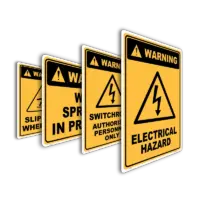
| Warning Signs | Signs warning of a hazard or hazardous condition that is likely not to be Life-Threatening but can cause injury. |
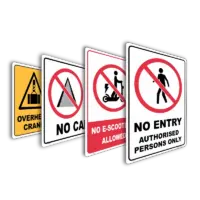
| Prohibition Signs | Signage that indicate that an action or activity is not Permitted. |
| Mandatory Signs | Signs that indicate that an instruction must be carried out. |
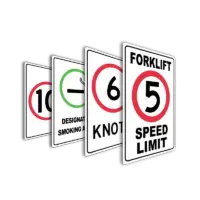
| Restriction Signs | Signage that place a numerical or other defined limits on an activity or use of a facility. |
| Emergency Signs | Signs that indicate the location of, or direction to, Emergency related facilities such as Exits, Safety Equipment or First Aid facilities. |
| Fire Signs | Signs advising the location of a Fire Alarms, services and Fire Fighting facilities. |
Warning Signs
Warning signs are used to alert people to potential hazards or dangerous conditions that are not life threatening but could cause injury or illness. These signs typically feature a black symbol on a yellow background, often with a black triangle. Warning signs are crucial for communicating potential hazards associated with specific areas, equipment, or substances in the workplace.
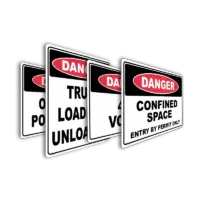
Danger Signs
Danger signs are crucial for indicating the presence of an immediate life threatening hazard. These signs utilize a red oval inside a black rectangle and are clearly visible and designed to grab attention. According to safety sign standards, a danger sign must be prominently displayed to alert individuals to extreme potential hazards that could result in serious injury or death. The use of safety signs is imperative in hazardous areas.
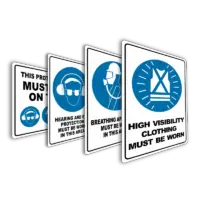
Prohibition and Mandatory Signs
These signs use a red annulus and slash over a black symbol on a white background to show a restriction. Prohibition signs clearly show which actions are not allowed. In contrast, mandatory signs use a white symbol on a blue background to direct people to the actions they must take Both types of signs indicate essential rules for maintaining workplace safety and preventing potential hazards in the work environment.
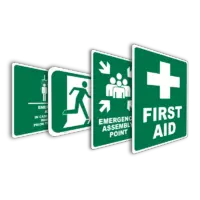
Emergency Information Signs
Emergency information signs are essential for guiding individuals to emergency-related facilities and exits during critical situations. These signs are designed with a white symbol on a green background, clearly indicating the location of safety equipment, evacuation routes, and other emergency-related facilities. The standards for safety ensures that this type of safety sign is easily recognisable and accessible in any work environment for optimal workplace safety.
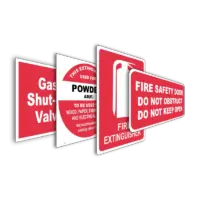
Fire Safety Signs
Fire safety signs are vital for indicating the location of fire alarms, fire extinguishers, and other fire safety equipment. The standards Australia specify that these signs must be easily visible and understandable. This type of safety sign uses white symbols on a red background, providing crucial information for responding to fire emergencies, contributing to overall workplace health and safety and minimising potential hazards.
First Aid Signs
First aid signs indicate the location of first aid stations and equipment, critical for addressing injuries and health emergencies in the workplace. This type of safety sign typically features a white cross on a green background, ensuring it is easily recognisable. These signs are crucial for providing quick access to medical assistance, supporting workplace health and safety and enabling a prompt response to injuries in the occupational environment.
Standards for Safety Signs in the Workplace
Australian Standard AS 1319 Overview
Australian Standard AS 1319 sets out the requirements for the design, color, and use of safety signs in the workplace. Adherence to the Australian Standard AS 1319 is essential for compliance with the Work Health and Safety Act and other regulations. This safety sign standard ensures consistency and clarity in safety signage across all industries. The Australian Standards for safety signs provides a framework for effective communication of hazards.
Design and Use of Safety Signs
The design and use of safety signs, as outlined in AS 1319, prioritise clear and concise communication. The safety standards specify the appropriate colours, symbols, and sizes for different types of signs indicate the level of hazard. Therefore, design ensures that signs are easily understood by everyone in the work environment, regardless of their background or language skills. The Australian safety signs are a vital component of workplace health and safety.
Viewing Distance and Visibility
Viewing distance and visibility are critical factors in the effectiveness of safety signs. The safety sign standards specify minimum sizes and placement guidelines to ensure that signs are easily visible from a safe distance. Proper lighting and contrast are also essential to enhance visibility for hazardous areas. Australian safety signs that meet these requirements are more likely to be noticed and understood, reducing the risk of accidents.
Implementing Safety Signage
Best Practices for Safety Sign Placement
Effective placement of safety signage is paramount for ensuring its visibility and comprehension within the work environment. The Australian Standard AS 1319 provides guidelines on the optimal positioning of signs, considering viewing angles and distances. Safety signage must be placed where individuals can clearly see them and take appropriate action in particular areas with potential hazards. Proper placement maximises the impact of health and safety signs and minimises risks.
Compliance with Health and Safety Regulations
Adhering to health and safety regulations in particular the Work Health and Safety Act, is essential for all Australian businesses. Compliance involves the correct use of safety signs. Including warning signs, danger signs, prohibition signs, and mandatory signs as specified by the Australian Standard. Therefore, Safety signage not only meets legal requirements but also demonstrates a commitment to workplace health and safety. Reducing potential hazards and improving the safety signs for the occupational environment.
Training Employees on Safety Sign Use
Training employees on the meaning and use of safety signs is a crucial step in creating a safe work environment. Employees should be educated on the different types of signs. These indicate, and the actions they should take in response to each. This includes understanding emergency signs, fire signs, and first aid signs. Effective training enhances workplace safety by ensuring everyone recognises and responds appropriately to safety signage and understands the standards for safety.
Conclusion
Summary of Key Points
IIn summary, Australian Standard AS 1319 provides the framework for effective safety signs in the workplace. Understanding the types of signs, like warning signs, danger signs, and mandatory signs, is crucial for maintaining workplace health and safety. Proper design, placement, and employee training are essential for maximising the impact of safety signage and minimising potential hazards. Adherence to these safety sign standards ensures a safer work environment.
Future Trends in Safety Signage
Future trends in safety signage are leaning toward more intuitive and technologically advanced solutions. Expect to see increased use of interactive displays, smart signs that adapt to real-time conditions. Augmented reality applications that provide detailed safety information. These advancements aim to enhance the effectiveness of safety signage. Making workplaces safer and more responsive to potential hazards and adhering to evolving Australian standards for safety signs in the occupational environment.