
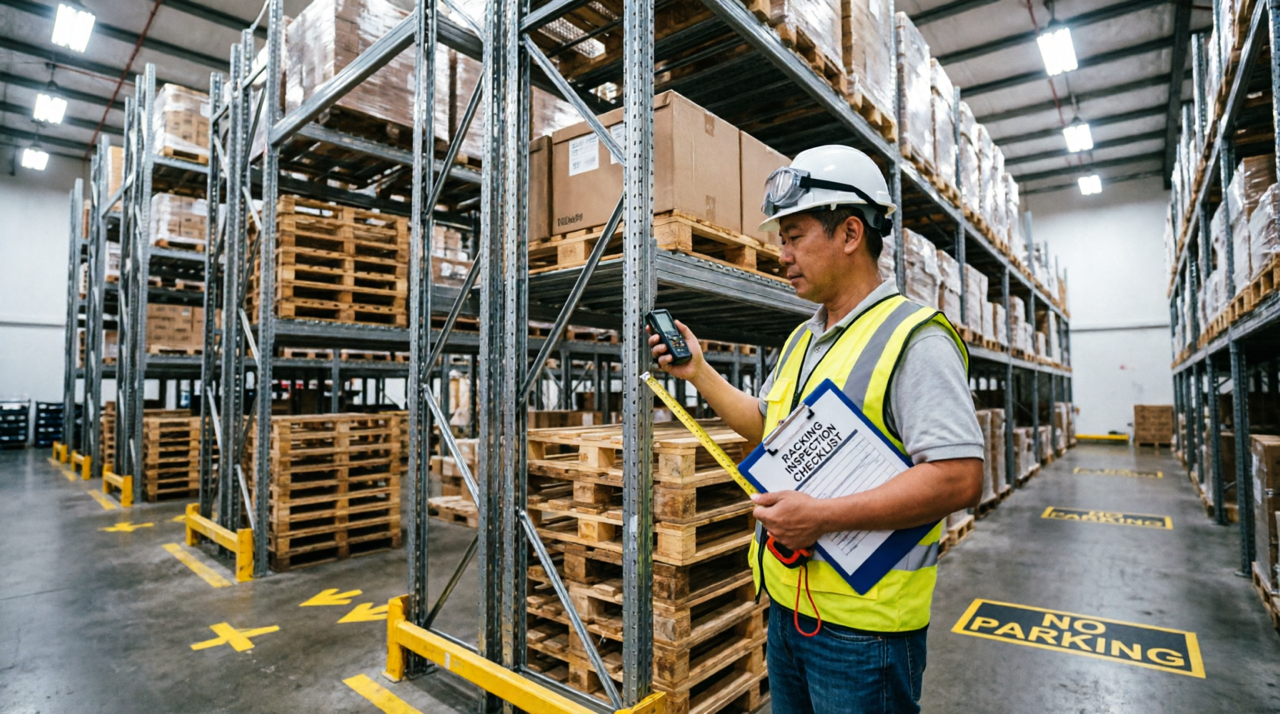
Under Australian Standard AS4084 – Steel Storage Racking, businesses have a responsibility to ensure their racking systems are structurally sound, correctly loaded, and regularly inspected. Failure to maintain pallet racking systems can lead to structural collapse, product damage, workplace injuries, and potential legal liability.
Australian Standard AS4084 requires formal inspections of pallet racking at least once every 12 months by a competent person, with more frequent checks recommended in high-traffic environments.
Why Pallet Racking Inspections Are Critical
Pallet racking is exposed to daily operational stress from forklifts, pallet loads, and general warehouse traffic. Over time, even minor impacts or overloading can compromise the structural integrity of the system.
Routine inspections help businesses:
- Identify structural damage early
- Prevent rack collapse or load failures
- Reduce the risk of workplace injuries
- Extend the lifespan of racking systems
- Demonstrate compliance with workplace safety regulations
Workplace safety regulators across Australia also expect racking systems to be inspected regularly as part of plant and equipment maintenance obligations.
What Inspectors Look For During Pallet Racking Inspections
Professional pallet racking inspections focus on identifying structural damage or misuse that could compromise safety.
Common issues found during Pallet Racking System inspections include:
Damaged Uprights
Forklift impacts can cause uprights to bend or dent, weakening the structure and increasing the risk of collapse.
Beam Damage
Overloaded or improperly loaded beams may show signs of deflection or deformation.
Missing Safety Locks or Beam Clips
Beam locking pins prevent beams from lifting out of place. Missing clips create serious safety hazards with your pallet racking.
Loose Anchors
Rack uprights must be securely anchored to the floor to prevent movement or tipping.
Misaligned Frames
Frames must remain vertical and square. Misalignment may indicate structural damage or foundation issues.
Corrosion or Wear
Rust or environmental damage can weaken metal components over time. Regular inspections help identify these problems early and allow businesses to repair or replace components before they fail.
Pallet Racking Signage Requirements (AS4084 Compliance)
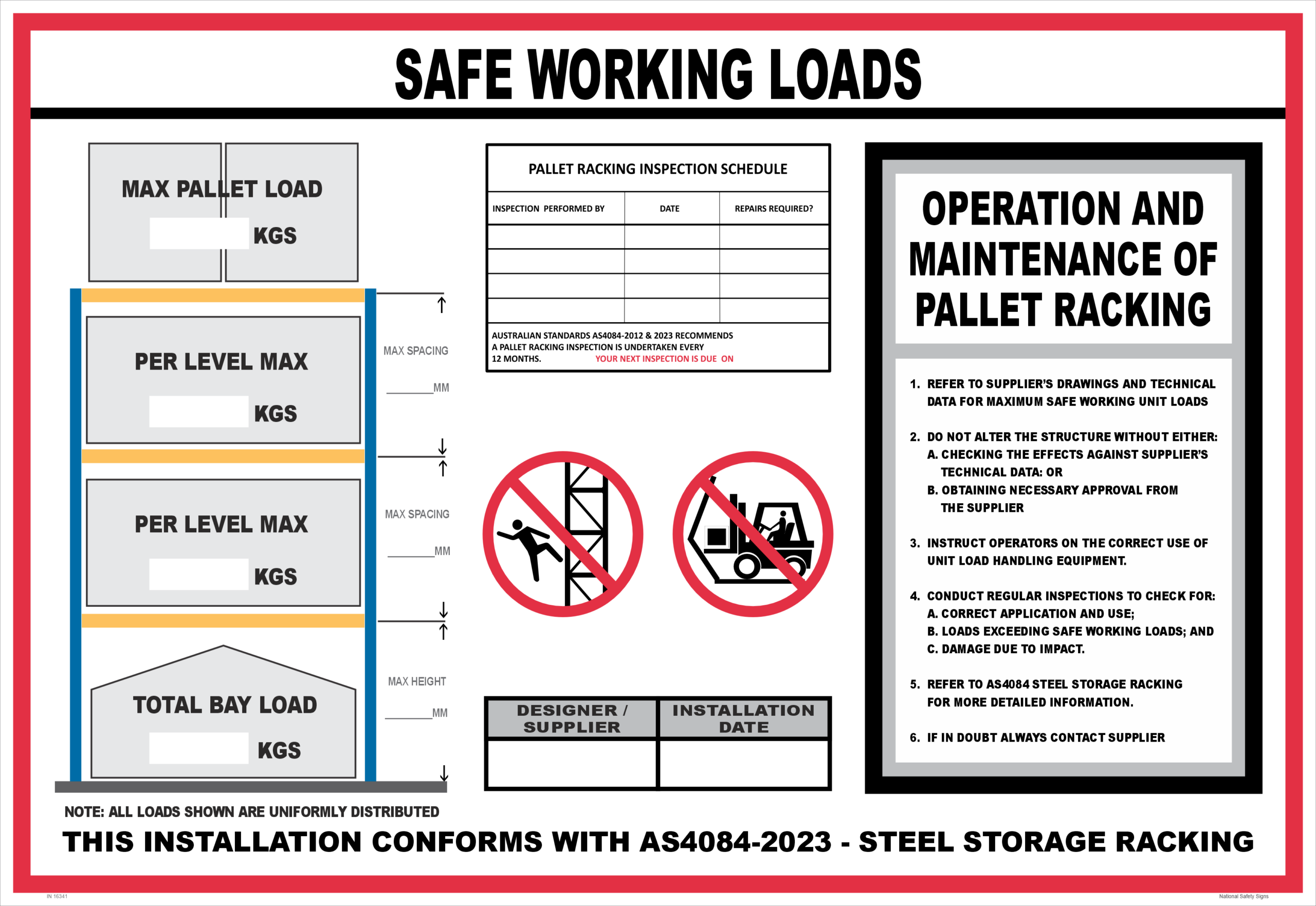
One of the most overlooked compliance requirements in warehouses is correct racking signage.
Under AS4084, every pallet racking system must display clear and visible Safe Working Load (SWL) signage. These signs communicate the load limits of the racking structure to forklift operators and warehouse staff.
Load signage must include key information such as:
- Maximum load per beam level
- Maximum load per racking bay
- Maximum rack height
- Manufacturer or installer details
- Configuration details of the rack system
These signs are critical because they help prevent overloading, which is one of the most common causes of racking failures.
Additional Safety Signage for Warehouse Racking Areas
In addition to load rating signs, warehouses should install additional safety signage to reduce risks around pallet racking systems.
Common warehouse safety signs include:
Displays maximum allowable load per beam and per bay.
Warns workers of forklift traffic around racking aisles.
Prevents workers from climbing racking structures.
Separates pedestrian walkways from forklift zones.
These safety signs form an important part of a workplace’s safety management system and help reinforce safe warehouse behaviour, beyond your Pallet Racking System.