
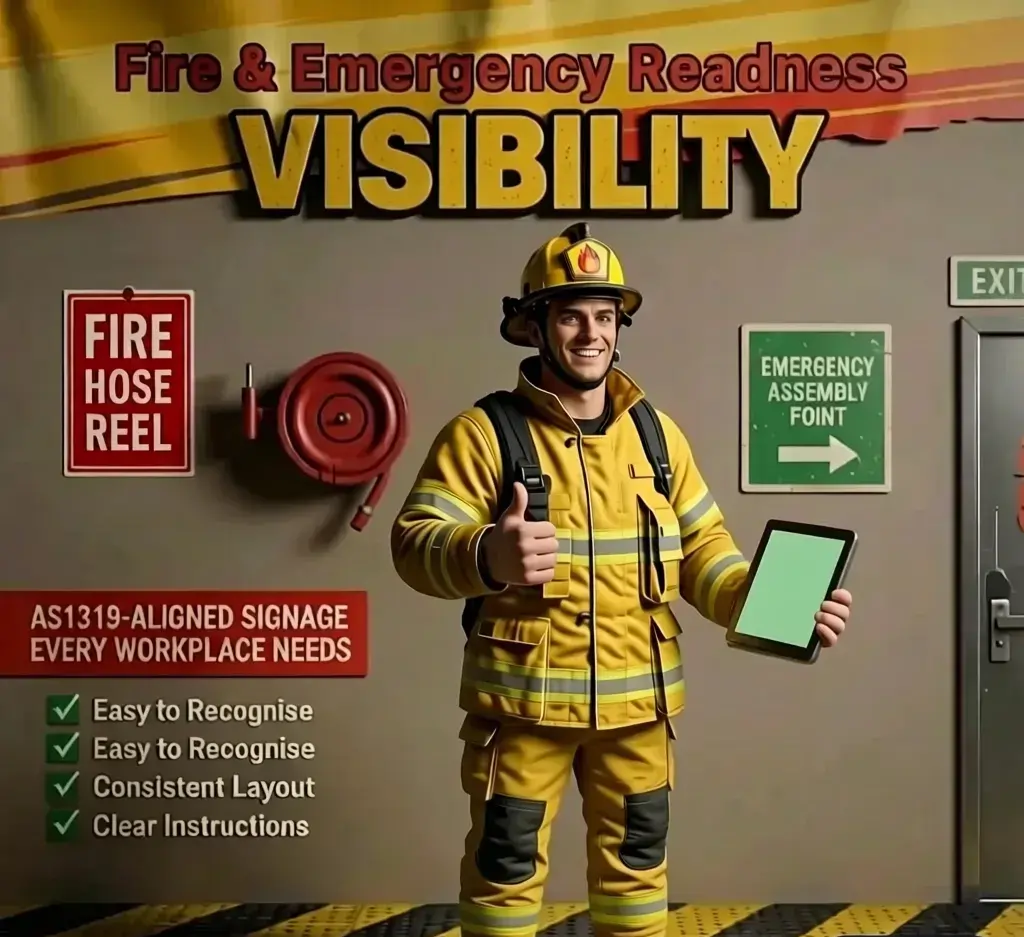
It All Starts With Visibility
When fire or smoke happens, the first few seconds matter in Fire Emergency Readiness. People don’t have time to search, second guess, or debate what they should do.
That’s why workplaces across Australia rely on clear, consistent fire and emergency signage to help people:
- locate fire equipment fast
- identify evacuation routes quickly
- follow a calm, simple response plan
Australia’s fire agencies consistently push preparedness and prevention, particularly during higher-risk seasons. AFAC’s seasonal outlook for summer 2025–26 highlighted regions across WA, NSW and VIC with increased fire risk — a reminder that Fire Emergency Readiness is a year-round responsibility.
1) What “AS1319-Aligned” Signage Means (In Plain English)
AS1319 provides the principles behind effective safety signage. While businesses often talk about fire signs as simply “red signs”, AS1319-type thinking is broader:
✅ A sign must be:
- easy to recognise at a glance
- consistent in colour and layout
- placed where people naturally look
- readable at the distance it’s needed
- not lost in clutter or behind doors/stock
Key point: Fire Emergency Readiness isn’t only about having equipment — it’s about people being able to find and use it instantly.
2) The Fire Emergency Readiness Signage Every Workplace Should Audit This Week
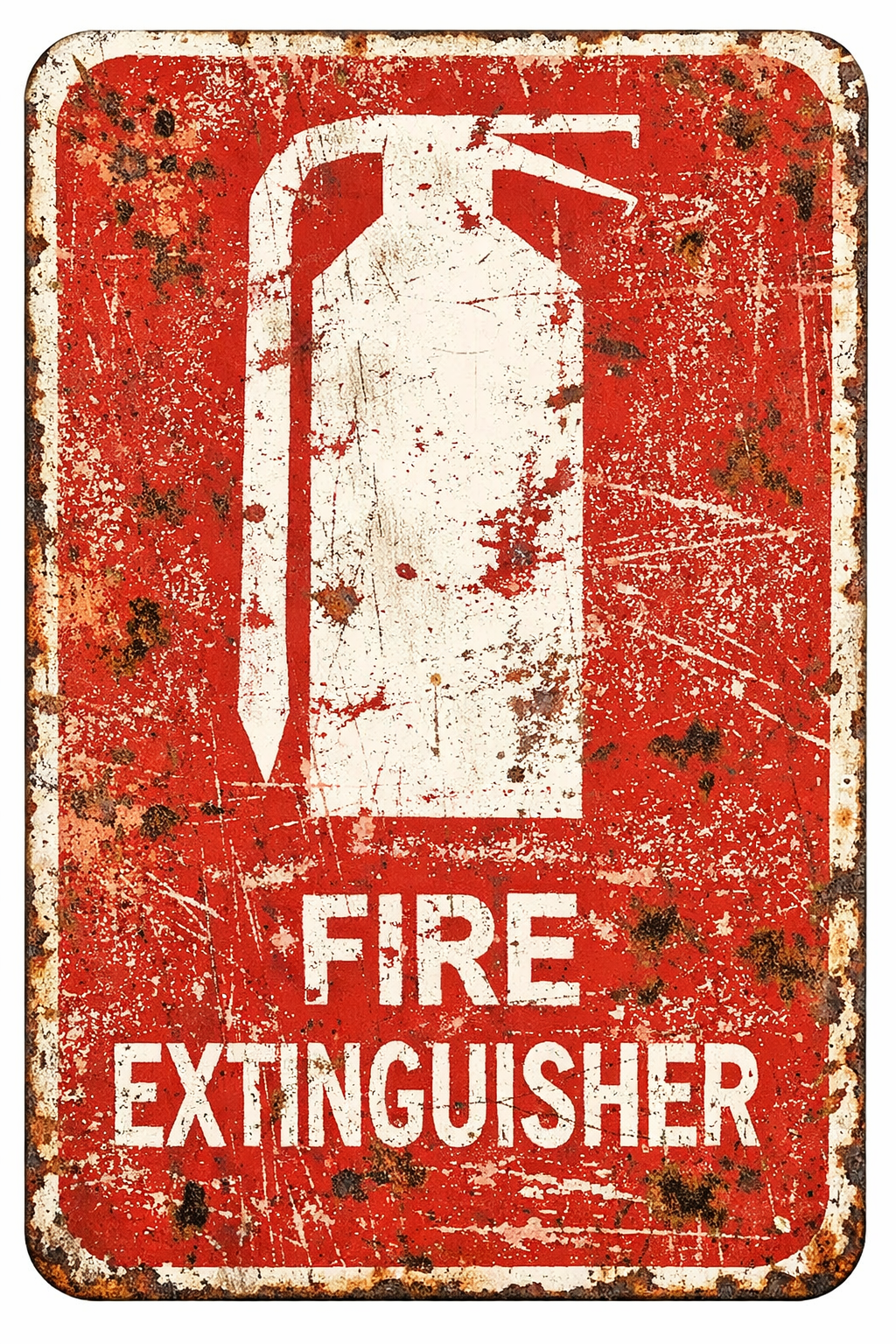
Here’s the simple fire signage audit checklist we recommend for February.
✅ Fire extinguisher signage
Make sure extinguisher locations are clearly signed and not blocked.
✅ Fire hose reel signage
These must be visible along the line of approach — especially in warehouses and factories.
✅ Fire blanket signage (if applicable)
Common in kitchens, lunch rooms, workshops.
✅ “In Case of Fire” action signage
This is extremely useful near exits and high-risk areas. Fire and Rescue NSW public guidance includes the message to remain calm and follow the RACE response approach.
✅ Assembly point signage
Assembly points reduce chaos and speed up head counts.
3) Fire Services Guidance That Every Workplace Should Apply for Fire Emergency Readiness
While requirements vary by site, fire agencies across Australia reinforce common readiness steps:
🔥 Keep emergency instructions simple
FRNSW advises that if you see fire or smoke: don’t panic, remain calm, raise the alarm, and call 000 — aligned with the RACE model.
🔥 Document and plan your emergency response
Queensland Fire & Emergency Services provide templates and checklists such as Fire Safety Management Plan resources (widely relevant as best-practice planning, even outside QLD).
🔥 Consider site and hazard-specific issues
FRV publishes fire safety guideline resources related to building and dangerous goods topics, reinforcing the need for correct risk-based controls and readiness.
4) The 60-Second Fire Signage Audit
Use this today for Fire Emergency Readiness:
- Can a new staff member find the extinguisher in under 10 seconds?
- Are fire signs visible from the natural approach path?
- Are signs consistent across the site?
- Is anything blocking signs (doors, pallets, stock, posters)?
- Are assembly point signs installed and easy to locate?
- Are exits and direction signs present and obvious?
If you want to upgrade your site’s Fire Emergency Readiness quickly, start here:
➡️ Shop Fire Safety Signs (Extinguishers, Hose Reels & Blankets)
➡️ Shop Emergency Exit & Directional Signage