
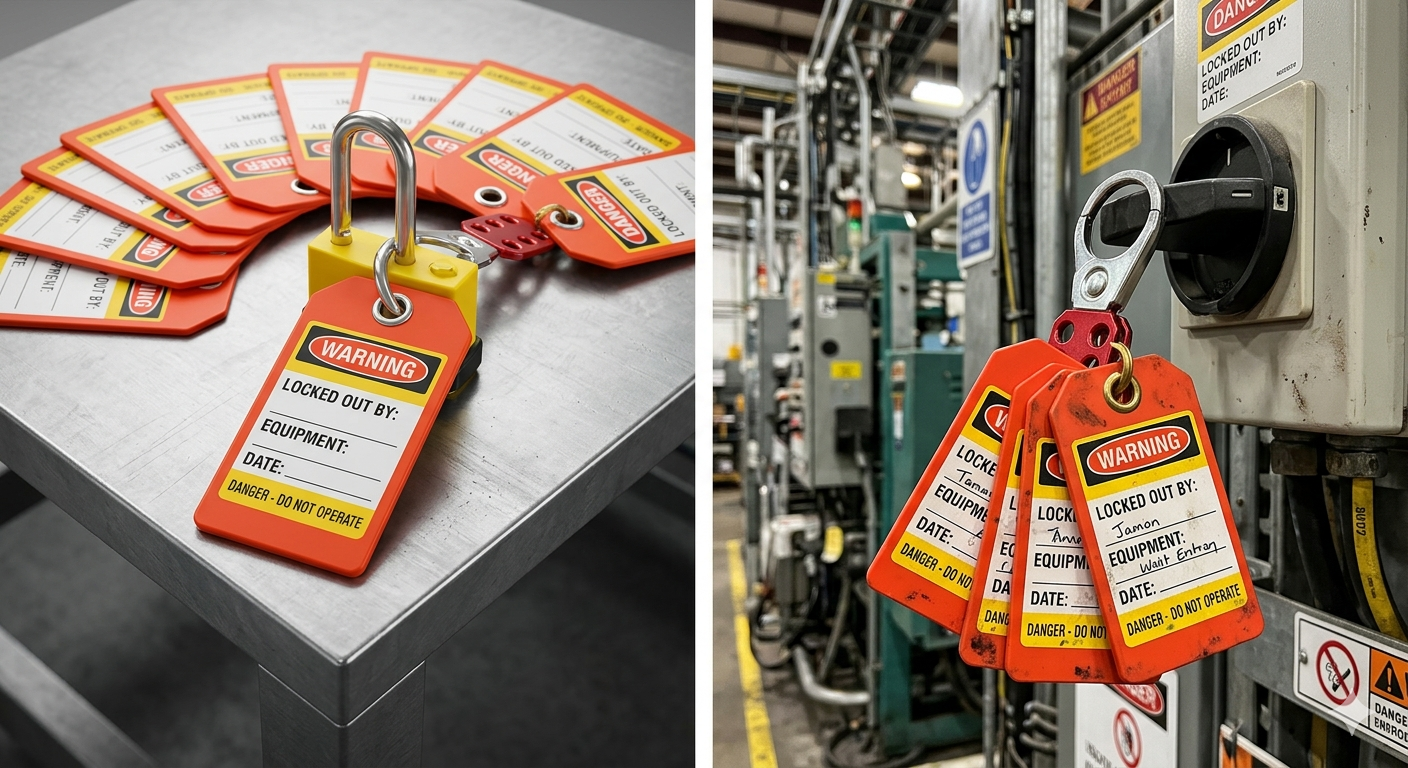
Signs, Tags & Isolation Procedures
Every year, workers across Australia are seriously injured — or killed — because energy sources were not properly isolated before maintenance work began. Lockout/tagout sign (LOTO) procedures exist to prevent exactly this. And at the heart of any effective LOTO system is clear, unambiguous signage and tagging.
Whether you are a WHS manager reviewing your isolation procedures, a maintenance supervisor preparing for a shutdown, or a safety officer auditing your site’s compliance, this guide covers everything you need to know about LOTO signs, tags and your legal obligations under Australian workplace health and safety law.
What Is Lockout/Tagout (LOTO) and Why Does It Matter?
Lockout/Tagout is a safety procedure used to ensure that dangerous machinery and equipment is properly shut off and rendered unable to be re-energised before maintenance, servicing or cleaning work is performed. It applies to any energy source — electrical, hydraulic, pneumatic, thermal, gravitational or chemical.
Under the Work Health and Safety Regulations 2017, managing the risks of plant and machinery includes establishing written safe work procedures for isolation. LOTO signage and tags are a core physical control in those procedures. Without them, a verbal instruction or a note on a whiteboard is not a compliant isolation system.
The Difference Between Lockout Tags and Lockout Signs
It is a distinction that matters — and one that is often misunderstood:
Lockout Tags
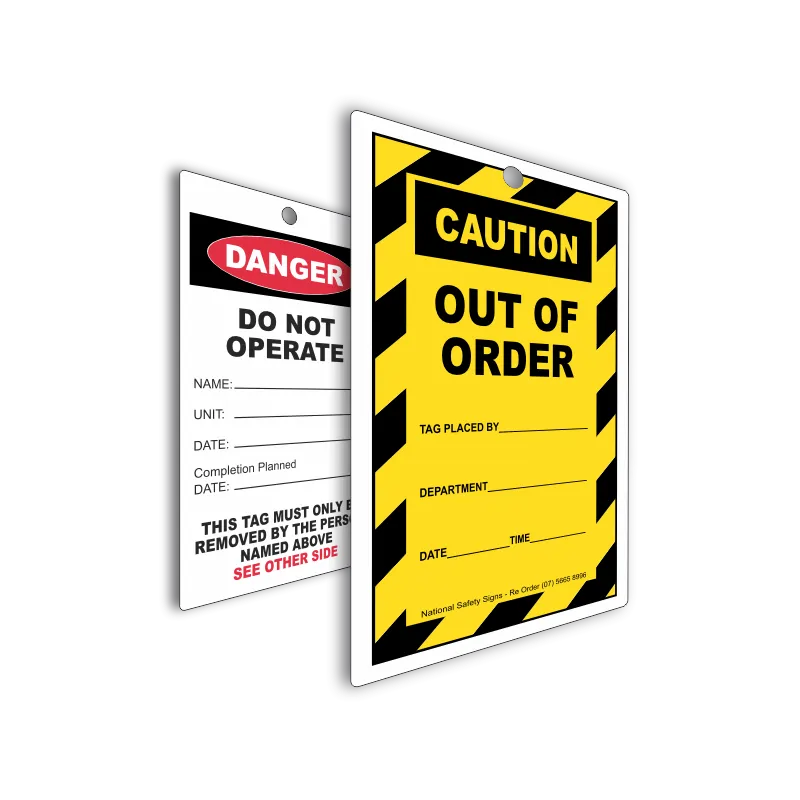
A lockout tag is a physical tag attached to an isolation point (switch, valve, circuit breaker) during maintenance work to communicate that the energy source has been isolated and must not be re-energised. Tags identify who applied the isolation, when it was applied, and why.
Tags alone are a secondary control — they should always be used alongside a physical locking device where possible. However, in many situations (particularly for quick maintenance tasks or where locking devices are not compatible with the isolation point), tags serve as the primary communication tool.
Lockout Signs
Lockout signs are fixed signs installed at or near isolation points, switchboards, or equipment that requires LOTO procedures. Common examples include:
- ‘Do Not Operate’ signs
- ‘Danger – Equipment Being Serviced’ signs
- ‘Isolation Point’ identification signs
- ‘Lockout Procedure’ instruction signs
What Does Australian Law Require for Lockout / Tagout?
The WHS Regulations require that a person conducting a business or undertaking (PCBU) must manage risks associated with the unexpected start-up or uncontrolled release of stored energy. This includes:
- Implementing written isolation procedures for all relevant plant and machinery.
- Ensuring energy sources can be identified and isolated before maintenance begins.
- Using lockout/tagout devices to secure the isolation point.
- Providing workers with the information, instruction, training and supervision needed to perform LOTO safely.
The primary Australian Standard for energy isolation is AS/NZS 4024.1503, which specifies requirements for the identification of isolation devices, lockout points and stored energy hazards. AS1319 governs the format, colour and placement of all signs used in the LOTO system.
What LOTO Signage Does Your Site Need?
A compliant LOTO system typically requires a combination of fixed signs and portable tags. Here are the four sign types every site should have:
1. Isolation Point Identification Signs
Mounted permanently at or directly adjacent to each energy isolation device, these signs identify what the isolator controls, the energy type, and the isolation state when LOTO is applied. Without these, maintenance workers cannot quickly confirm they have isolated the correct energy source.
2. Danger: Do Not Operate Signs
The most recognisable LOTO sign. Applied at the point of isolation when LOTO is in place — either as part of a fixed sign holder or as a tag attached to the physical lock. AS1319-compliant ‘DO NOT OPERATE’ signs use the Danger format: red header with white text, white body with the isolation instruction.
Important: these signs should never substitute for a physical lock. The sign communicates the isolation status; the lock prevents it from being reversed.
3. Lockout/Tagout Procedure Signs
Mounted near the equipment or at the work area entry, procedure signs outline the steps of the LOTO process specific to that equipment. For complex machinery with multiple energy sources, a laminated procedure card covering each isolation point is appropriate.
4. LOTO Station Signs
If your workplace uses a centralised LOTO station — a board or cabinet where locks, tags and LOTO equipment are stored — it must be clearly signed. This makes the equipment accessible to all workers including contractors and labour hire who may not have received a site tour.
Choosing the Right Lockout Tagout Tags for Your Site
Not all lockout tags are equal. When selecting tags for Australian industrial environments, consider the following:
- Material durability: Tags must withstand your environment — heat, UV exposure, oils, chemicals or moisture. Polypropylene is the preferred material for most industrial applications.
- UV stability: Outdoor or high-UV environments require UV stable printing to ensure the tag remains legible throughout its working life.
- Customisation: Tags should include fields for worker name, plant ID, and date. Custom-printed tags with your site’s specific requirements are the most compliant option.
- Standardisation: All tags across a site should use the same format so any worker can read them quickly under pressure.
Building a Compliant LOTO Signage System: A Practical Approach
A complete system does not need to be complex. Follow these five steps:
- Map your energy sources. Walk your site with the maintenance team. Identify every electrical isolator, pneumatic shut-off, hydraulic control valve and any other energy control device that forms part of a maintenance procedure.
- Assign sign types to each point. For each isolation device: Does it have a permanent identification sign? If LOTO is applied here, is there a compliant ‘Do Not Operate’ sign or tag system?
- Identify stored energy hazards. Mark any equipment that retains energy after isolation — capacitors, UPS, variable speed drives. These require additional warning signage beyond the standard isolation label.
- Establish the LOTO station. Set up a centralised LOTO station and sign it clearly. Ensure it contains sufficient locks and tags for all workers who may simultaneously perform LOTO on site.
- Review with your maintenance team. Walk through the system with the workers who use it. If they can navigate the LOTO procedure using only the signage — without referring to a manual — your system is working.
Common LOTO Signage Questions
Can we use commercially printed tags instead of standardised Lockout / Tagout tags?
Yes, provided they meet AS1319 format requirements. Custom printing is acceptable — and often preferable for site-specific information. The Danger format, colour coding and minimum content requirements must be met.
How long should LOTO signs last?
In industrial environments, expect to replace signs every 3-5 years. In clean environments, well-made polycarbonate or aluminium signs can last 10 or more years. The test is legibility: if the sign requires close inspection to read, replace it.
Do LOTO requirements apply to low-voltage (240V) equipment?
Yes. 240V is more than sufficient to cause fatal electrocution. LOTO requirements apply to any isolation procedure where contact with live parts could occur, regardless of voltage.
Ready to Build Your LOTO Signage System?
National Safety Signs carries a full range of AS1319-compliant LOTO signs, tags and station equipment. From simple ‘DO NOT OPERATE’ signs to complete multi-lock LOTO station setups, we supply the signage that makes the system work.
Stay connected with us on social media for updates, new products, and workplace safety information.


Why Choose National Safety Signs for your electrical signage?
Customers consistently leave positive reviews highlighting our signs’ durability, fast delivery, and excellent customer service. From councils to construction companies, organisations across Australia trust us for reliable, high-quality safety signage.
“Thanks National Safety Signs for your signs, they arrived very quickly and were exactly what I needed!” — Rosemary National Safety Signs
Google / Yably reviews rate the company 4.90/5 from around 400 reviews
Related reading: Electrical Safety Signage in Australia: What the Law Requires and What Your Site Needs
This article provides general guidance on LOTO signage requirements under Australian standards. For site-specific advice, consult a licensed electrical engineer, WHS specialist or SafeWork-accredited consultant.
References: AS/NZS 4024.1503:2014, AS1319-1994