
What the Law Requires and What Your Site Needs
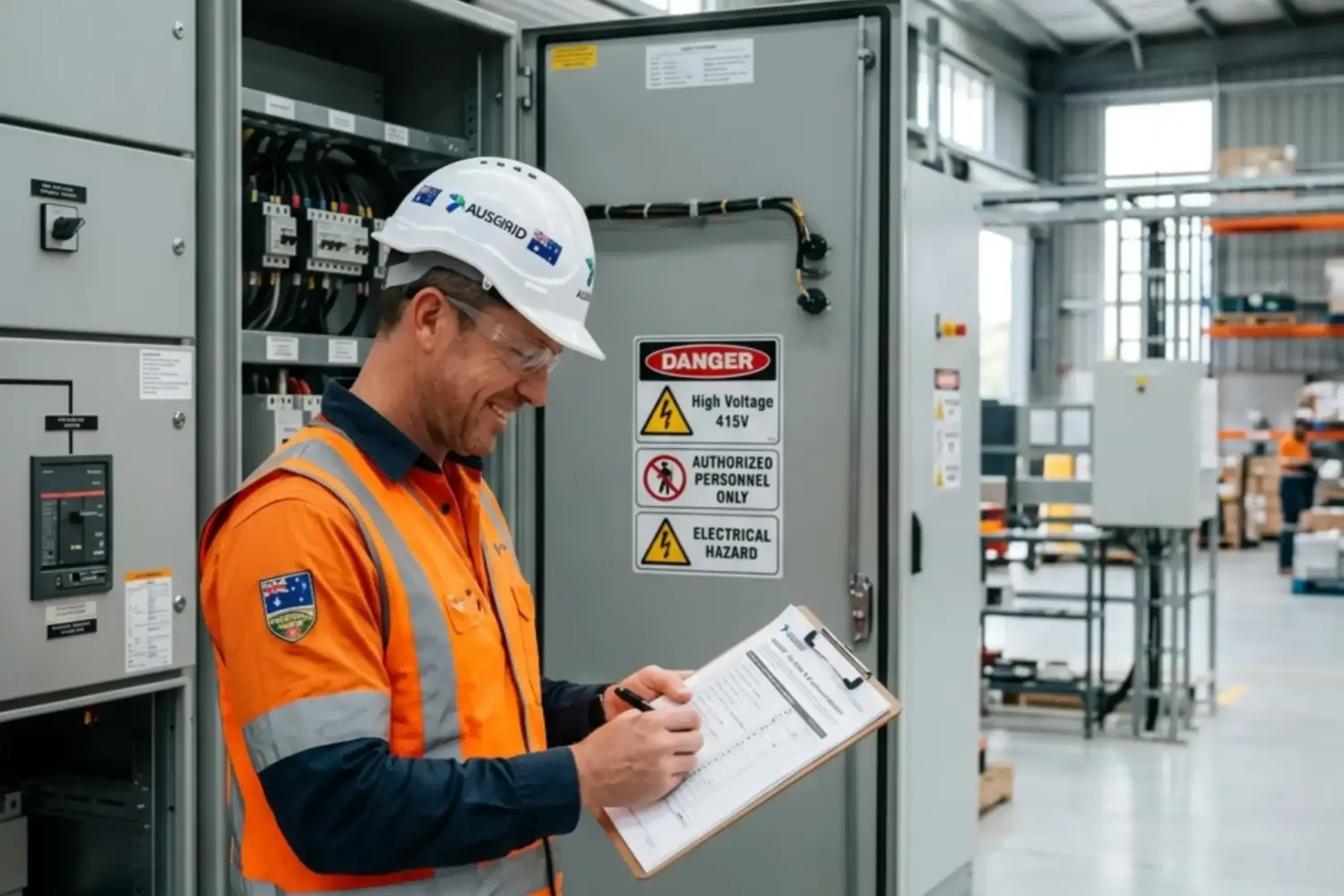
Electrical hazards are one of the leading causes of serious workplace injuries and fatalities across Australia. Yet one of the most effective, and legally required, safeguards is also one of the most overlooked: proper electrical safety signage.
Whether you manage a manufacturing plant, a commercial building, a construction site, or any facility with electrical infrastructure, the right signs in the right places can mean the difference between a safe worksite and a tragic one. And when the regulator comes knocking, the absence of correct signage is one of the fastest ways to attract a penalty notice.
In this guide, we break down exactly what the law requires, which electrical safety signs your site must have, and how to avoid the most common compliance mistakes.
Why Electrical Signage Is a Legal Requirement — Not a Suggestion
Electrical signage isn’t discretionary. Under the Work Health and Safety Act 2011 (WHS Act) and its supporting regulations, employers have a duty to identify and manage electrical risks — and signage is a key control measure in that risk hierarchy.
The relevant Australian Standards that govern electrical signage include:
- AS/NZS 3000:2018 (Wiring Rules) — specifies labelling and identification requirements for switchboards, circuits and electrical equipment.
- AS 1319:1994 — Safety Signs for the Occupational Environment — the foundational standard for workplace safety sign design, colour coding and placement.
- State and territory WHS regulations — which may impose additional requirements depending on your jurisdiction and industry.
Non-compliance doesn’t just put workers at risk — it exposes your organisation to significant fines, increased liability in the event of an incident, and potential prosecution.
The Five Essential Categories of Electrical Safety Signs
Not all electrical environments are the same, but there are five core categories of signage that apply to almost every site with electrical infrastructure:
1. Electrical Hazard Warning Signs
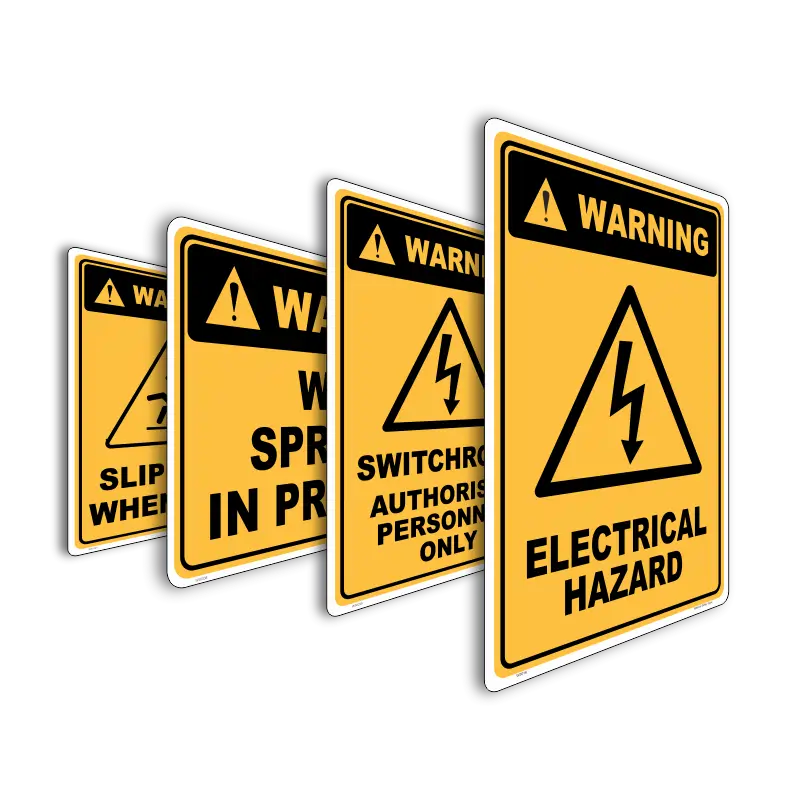
These are your first line of communication. Electrical hazard signs warn workers and visitors of the presence of live electrical equipment, overhead power lines, or areas where electrical risks exist. Look for AS 1319-compliant yellow and black warning signs with the standard electrical hazard symbol.
2. High Voltage Warning Signs
High voltage environments require specific signage that clearly communicates the risk of electrocution. This electrical signage must be posted on or near high voltage equipment, switchboards, substations, and transformer enclosures. Under AS/NZS 3000, they must also include voltage ratings where appropriate.
3. Lockout / Tagout (LOTO) Signs
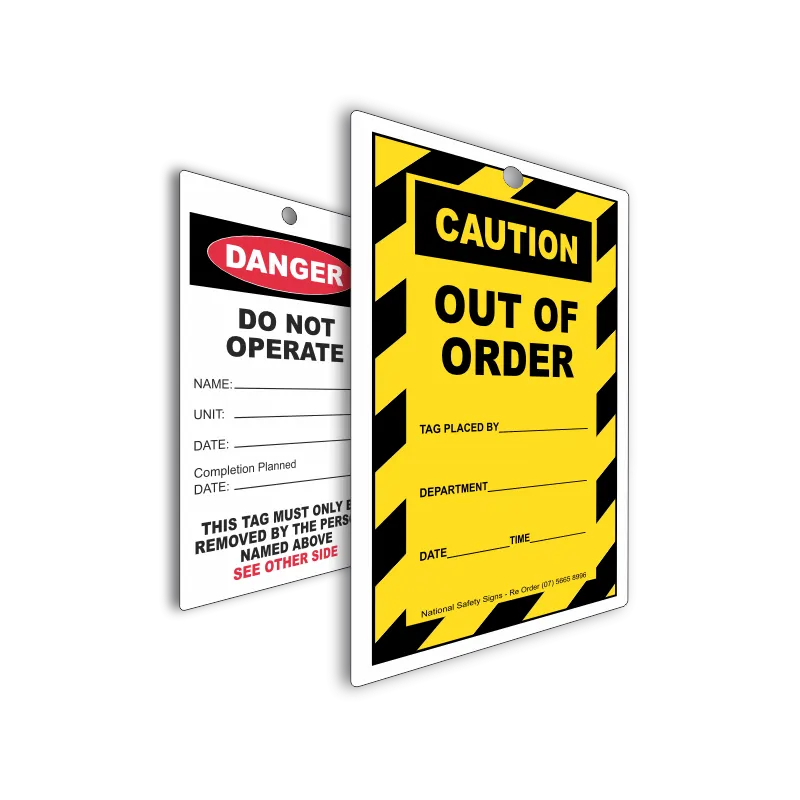
LOTO signs communicate isolation procedures and ‘Do Not Operate’ instructions during maintenance and repair work. They’re essential wherever energy isolation is required and form a critical part of safe work procedures for electrical maintenance.
4. Restricted Access & Authorised Personnel Signs
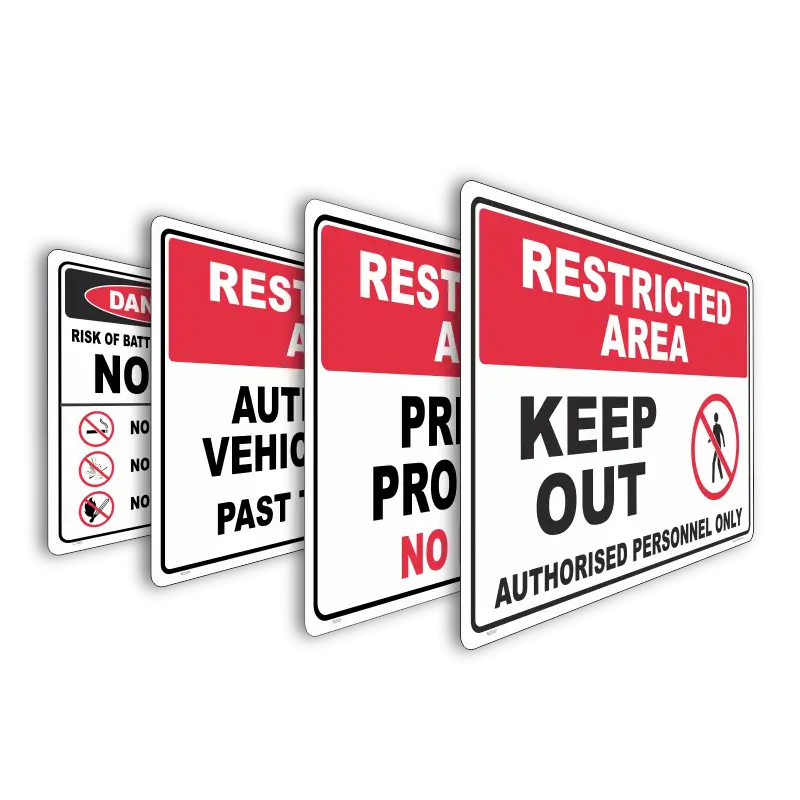
Electrical rooms, switchboard enclosures, and areas containing high voltage equipment should have restricted access signage to prevent unauthorised entry. These signs help manage risk from untrained personnel encountering live electrical infrastructure.
The Most Common Electrical Signage Compliance Mistakes
During safety audits, electrical signage failures fall into a predictable set of categories. Here is what to check during your FY2026-27 audit:
AS1319 uses different sign categories for different risk levels. A ‘Caution’ sign (yellow) communicates a potential hazard. A ‘Danger’ sign (red) communicates an immediate, life-threatening hazard. For any live 240V or above exposure, the sign should be Danger, not Caution. Using the wrong category is a genuine compliance failure — and one that is easy to miss if you are not familiar with the standard.
UV exposure, moisture, chemical contact and general wear can make signs illegible over time. A sign that was compliant when installed three years ago may now be unreadable. Any sign that requires close inspection to decipher needs immediate replacement. Pay particular attention to switchboard labels and outdoor signs.
Every isolation point that forms part of a safe work procedure must be clearly identified. In practice, many sites have unlabelled isolators, making it impossible for maintenance workers or emergency responders to quickly find the correct switch. This is both a safety failure and a LOTO compliance gap.
Capacitor banks, UPS systems and variable speed drives can retain dangerous electrical charge even after the main supply is isolated. These require specific stored energy warning signs — a point many audits miss entirely.
Lockout/tagout is only effective when every isolation point is identified, the procedure is communicated through signage, and the right tags are in use. Tags without accompanying fixed signs, or signs that do not identify the specific isolation point, leave critical gaps in the system.
Conduct Your FY2026-27 Electrical Signage Audit
The start of the financial year is the natural moment to conduct a signage audit. Here is a simple three-step process:
- Walk the facility with a checklist. Using your site electrical drawings and AS1319 as a reference, identify every electrical hazard that requires signage. This includes switchboards, distribution boards, isolation points, stored energy equipment, high voltage enclosures and all machinery with LOTO requirements.
- Assess condition and compliance. For each existing sign: Is it still legible? Is it the correct category? Is it in the correct position? Is the material appropriate for the environment?
- Replace and fill gaps. Order replacements for damaged or non-compliant signs and new signs for any gaps identified. Budget for a full replacement of switchboard labels every 5-7 years as a minimum.
What to Look for When Buying Electrical Safety Signs
Not all signs are created equal. Here is a practical checklist for procurement:
Compliance
- Is the danger/warning/caution category correct for the hazard level?
- Is the symbol or pictogram standardised — not custom artwork that could be misinterpreted?
Durability
- What is the electrical signage material? For outdoor or industrial environments, look for aluminium, polycarbonate or industrial-grade polypropylene.
- Is the sign rated for UV resistance, moisture resistance and the chemical exposure relevant to your environment?
- What is the expected service life? A quality sign installed once is far more cost-effective than a cheap sign replaced annually.
Legibility
- Is the font size appropriate for the viewing distance? AS1319 provides minimum letter height requirements.
- Is the contrast sufficient? Red on white and black on yellow are high-contrast combinations.
- For switchboard labels — is the adhesive rated for the surface type and operating temperature range?
Contact National Safety Signs
National Safety Signs Online Store and Retail Shopfront is based in South East Queensland and supplies safety signage throughout Australia.
For enquiries, urgent orders, or bulk pricing:
- Phone: 07 5665 8996
- Australia-wide delivery available
- Express freight options available
- Buy online – https://nationalsafetysigns.com.au/
Stay connected with us on social media for updates, new products, and workplace safety information.


Why Choose National Safety Signs for your electrical signage?
Customers consistently leave positive reviews highlighting our signs’ durability, fast delivery, and excellent customer service. From councils to construction companies, organisations across Australia trust us for reliable, high-quality safety signage.
“Thanks National Safety Signs for your signs, they arrived very quickly and were exactly what I needed!” — Rosemary National Safety Signs
Google / Yably reviews rate the company 4.90/5 from around 400 reviews, highlighting product quality, fast delivery, and good customer service. Yably
This article provides general guidance on Australian electrical safety signage standards. For site-specific compliance advice, consult a licensed electrical engineer or WHS specialist.
References: AS1319-1994, AS/NZS 3000:2018, AS/NZS 4024.1:2014, Safe Work Australia — Work-Related Injuries and Fatalities