
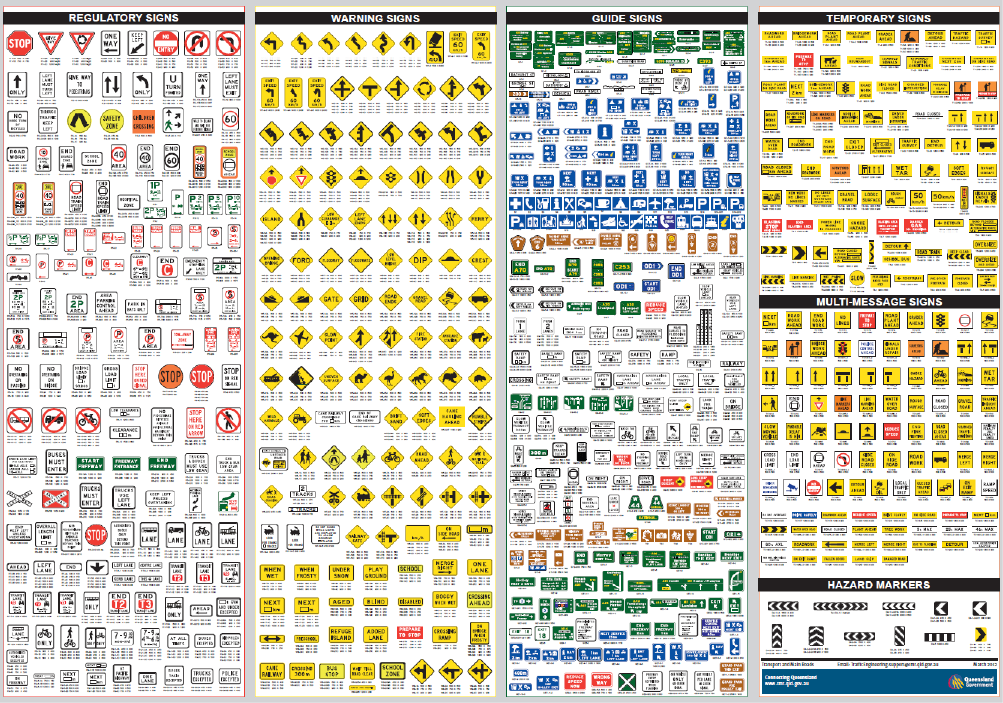
What Every Worksite Must Get Right with Traffic Signage (R, W, G, D, T & TM Series Explained)
Traffic Signage Compliance: Why It Matters More Than Ever
Traffic signage is one of the most critical safety controls on any worksite, roadway, or commercial property. It’s not just about putting up signs however, — it’s about ensuring drivers and pedestrians can instantly understand what to do.
Across Australia, traffic signage is governed by the AS1742 series (Manual of Uniform Traffic Control Devices) and AS1743 (Road Sign Specifications). These standards ensure signage is consistent, visible, and legally enforceable nationwide.
When signage is inconsistent or unclear, the result is simple:
👉 confusion
👉 hesitation
👉 increased risk
The Standards Behind Traffic Signage in Australia
AS1742 – How Signs Are Used
AS1742 sets the rules for:
- where signs should be placed
- how far in advance they must be installed
- what type of sign is required for each situation
- visibility and readability requirements
It ensures traffic control devices are used consistently across all states, reducing driver confusion and therefore, improving safety.
AS1743 – How Signs Are Made
AS1743 specifies:
- graphics and symbols
- fonts (AS1744 typeface)
- colours and layout
- sizing and materials
As a result, this ensures every sign looks the same across Australia and can be recognised instantly.
Understanding the Main Traffic Sign Series
🔴 R Series — Regulatory Signs
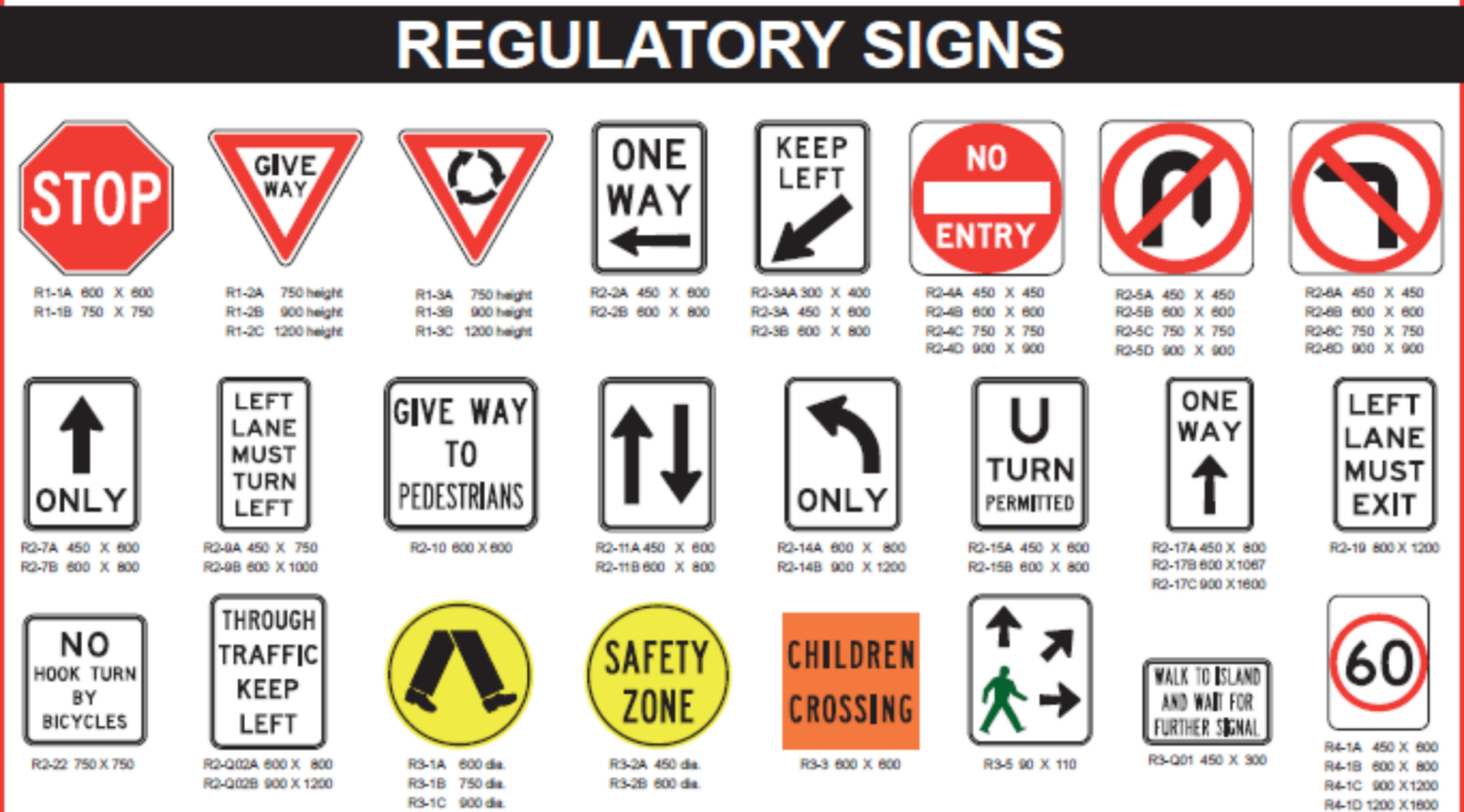
These are enforceable by law.
For example:
These signs tell road users what they must do, and failure to comply can result in penalties.
👉 Must be:
- clearly visible
- correctly sized for speed zones
- placed at decision points
⚠️ W Series — Warning Signs
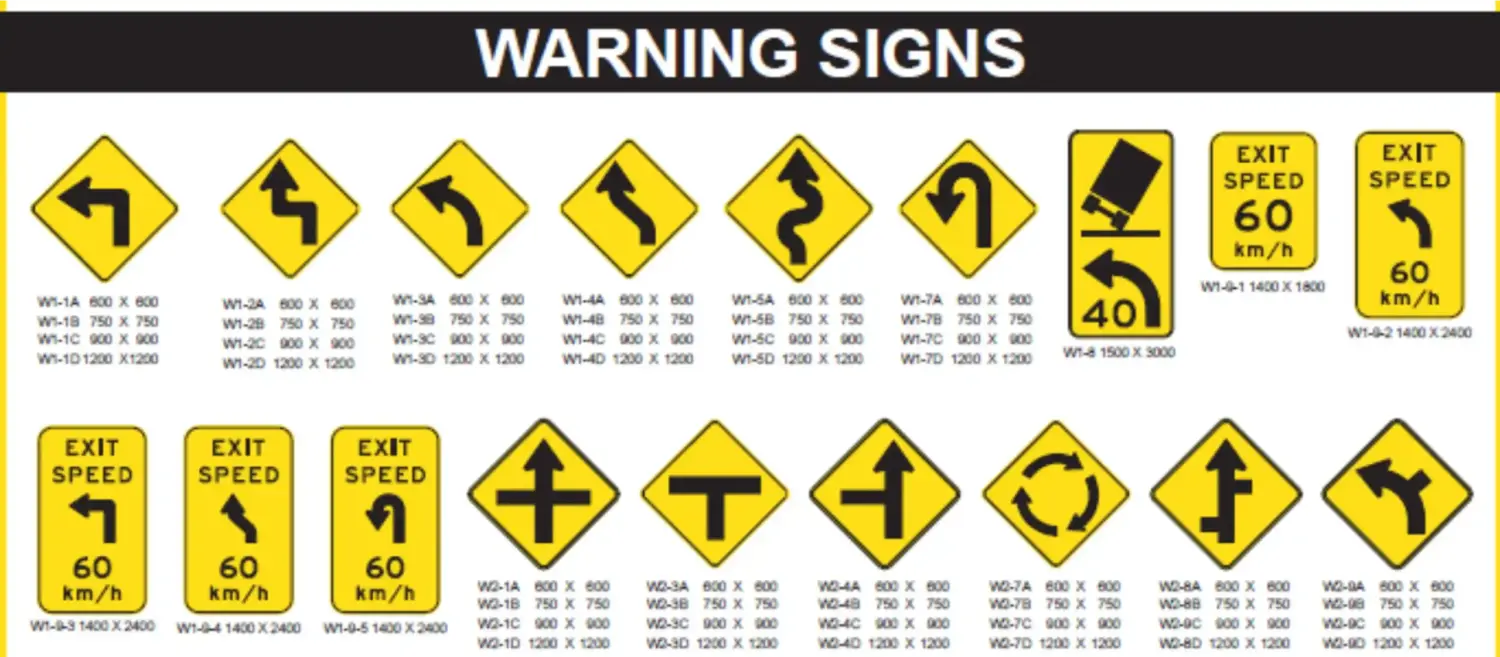
Used to alert drivers to hazards ahead.
Examples:
- Wildlife such as Kangaroos
- Pedestrian crossing
- Sharp bends
These signs give drivers time to react safely, using consistent shapes (typically diamond) and symbols.
🟢 G Series — Guide Signs
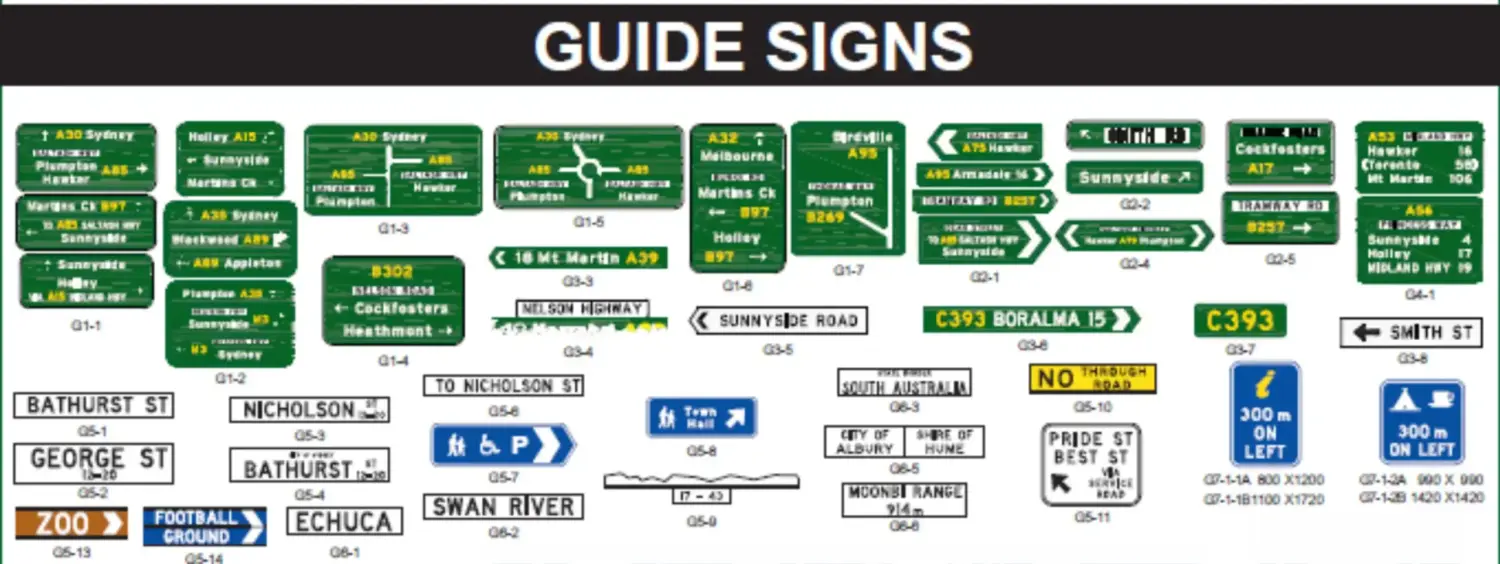
Used for direction, navigation, and site flow.
For example:
- Traffic Entry / Exit
- Detours
- Tourism directions
This traffic signage improves traffic flow and reduce confusion, especially in busy or unfamiliar environments.
🟡 D Series — Hazard Markers
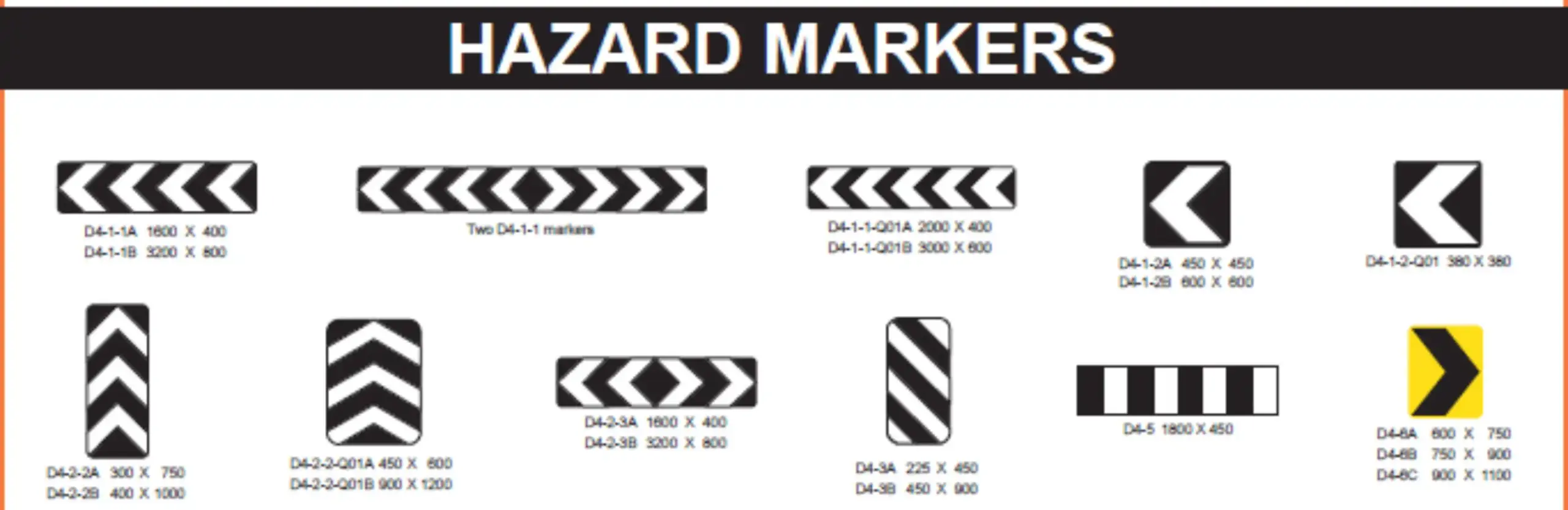
Used to highlight fixed hazards or changes in alignment.
Examples:
- Chevron alignment markers
- Object markers
- Curve indicators
👉 Critical in scenarios such as:
- high-speed roads
- bends
- roadside hazards
🚧T Series — Temporary Traffic Signs
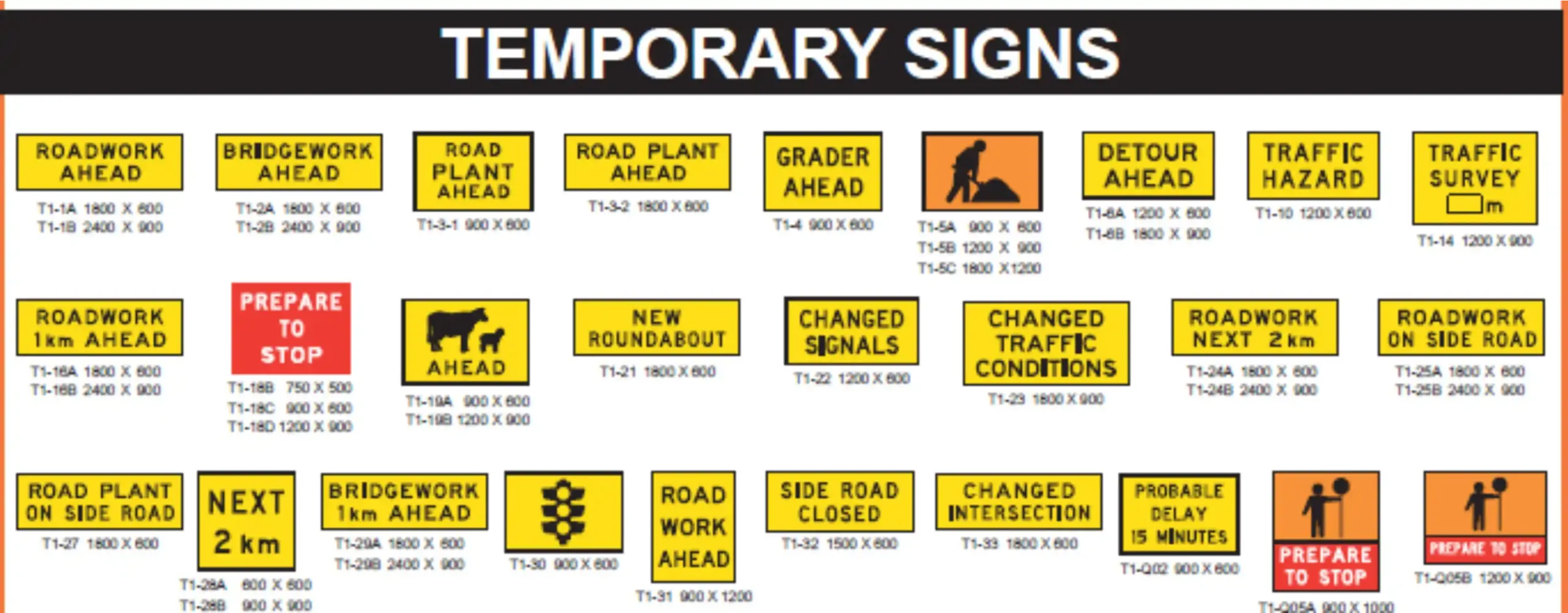
Used for roadworks and short-term conditions.
Examples:
- Roadwork ahead
- Lane closures
- Temporary speed reductions
AS1742.3 outlines strict rules for temporary traffic signage to protect both workers and drivers during changing road conditions.
🔶TM / Multi-Message Signs
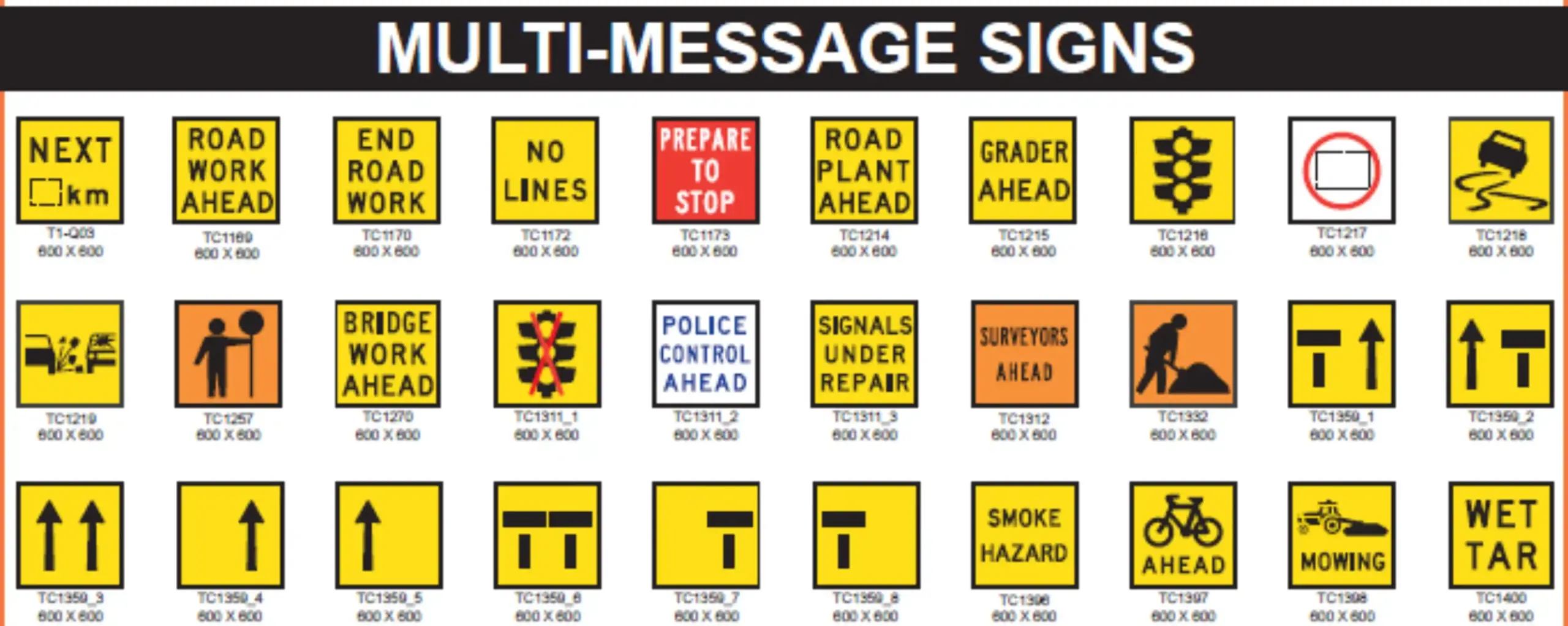
Used for combining messages into one sign.
Examples:
- “ROAD WORK AHEAD – PREPARE TO STOP”
- “END ROADWORK”
These are often used in, for instance:
- civil works
- traffic control setups
- temporary traffic management plans
👉 Must be:
- clear
- uncluttered
- logically structured
Why Standardisation Is Critical
Australia uses a uniform system of traffic signage nationwide, meaning drivers can travel between states and still instantly understand signage.
As a result, this consistency:
- reduces reaction time
- improves compliance
- More importantly, lowers accident risk
In addition, uniform signage has been shown to improve safety outcomes by making instructions predictable and easy to follow.
Common Traffic Signage Mistakes (We See These Every Week)
❌ 1. Incorrect Sign Selection
Using the wrong series or incorrect symbol.
❌ 2. Poor Placement
- Too close to hazard
- Too far away
- Not in line of sight
❌ 3. Wrong Size for Environment
AS1742 links sign size to:
- road speed
- viewing distance
If signs are too small, they are ineffective.
❌ 4. Lack of Reflectivity
Signs must be readable:
- day in addition to night
- in poor weather
❌5. Missing Temporary Traffic Signage
One of the biggest compliance risks on worksites.
❌ 6. Cluttered Messaging
Too many signs = no clear message
The 60-Second Audit
Use this checklist on your site today:
- ✅ Can drivers understand your site instantly?
- ✅ Are signs visible from the correct approach distance?
- ✅ Is the correct sign series (R, W, G, D, T, TM) being used?
- ✅ Temporary hazards – are they clearly marked?
- ✅ Are signs reflective and therefore readable at night?
- ✅ Are signs placed consistently across the site?
- ✅ Is anything blocking visibility (stock, vehicles, structures)?
Final Thought: Compliance = Clarity
Traffic signage isn’t just about compliance, in addition, it’s about communication under pressure.
If a driver has to think, hesitate, or guess — the system has already failed.
The goal is simple:
👉 Clear message
👉 Instant understanding
👉 Above all – a safe outcome
Why Choose National Safety Signs for your signage?
Customers consistently leave positive reviews highlighting our signs’ durability, fast delivery, and excellent customer service. Organisations such as councils and construction companies across Australia trust us for reliable, high-quality safety signage.
“Thanks National Safety Signs for your signs, they arrived very quickly and were exactly what I needed!” — Rosemary National Safety Signs
Google / Yably reviews rate the company 4.90/5 from around 400 reviews, highlighting product quality, fast delivery, in addition to good customer service. Yably
Contact National Safety Signs
National Safety Signs Online Store and Retail Shopfront is based in South East Queensland and supplies safety signage throughout Australia.
If you have enquiries, urgent orders, or bulk pricing:
- Phone: 07 5665 8996
- Australia-wide delivery available
- Express freight options available
Don’t forget to stay connected with us on social media for updates, new products, and workplace safety information.